Sunday, August 21, 2011

Tanzania Part 3 - Serengeti


Damn it's good to be home. Good to be home because here, I can walk around without being called a "chino" all the time - in the U.S., people only think I'm Chinese and that's a big difference. Also good to be home because my home is Southern California, and Southern California has authentic Mexican food, which I haven't had in a long time, and authentic Mexican girls to order them with me, which I haven't... yeah. But home is home, no matter the latitude and longitude, and I had been away from mine for far too long. It's good to be back, fam.

My return journey to the States, which spanned more than 24 hours inside cabin doors across five cities, went as smoothly as my pick-up lines for all but one stop. As I passed through security at JFK Airport, the TSA official womanning the carry-on X-ray machine vigilantly but mistakenly nabbed the Nicaraguan coffee stowed away in my backpack for the dark, powdery goodness it shares with a far more nefarious substance. For some reason, she must've not taken me for a delinquent youth trapped in a lifestyle of wheeling and dealing for tuition fees because her method of divining its identity was to administer only a quick sniff. Still counts as scientific method, I suppose, although a conniving cartel leader who reads this blog (probably has a tattoo that reads "Surk14") could now easily traffic cocaine to homies all over the world by giving it some coffee aroma.

Anyway, on we proceed with my adventures in Tanzania. Our next stop is Serengeti National Park, a place I never thought I'd get to visit in my lifetime. All in all, it's probably the most beautiful sliver of the natural world I've seen, if we set the scale of a sliver to a full rotation panorama, etchable in our retinas only in discrete frames. The conditional statement is probably necessary because I've been blessed to come face-to-face with some pretty incredible wonders of the world - Grand Canyon, Sedona, the Canadian Rockies, and Bahia de las Aguilas Beach in the Dominican Republic come to mind - that command their fair share of desktop wallpapers. But it's also because when I am walking in the fields behind my apartment complex at dusk, smelling the greenery, faint perfumes of passerbys, and barbecued meats in back yards unseen, feeling the wave of warmth generated from all that life, and watching the violet, vermillion, and cobalt of sunset, dulled by the granular slate of Los Angeles smog, tint the grass a thick metallic glow, I think it's pretty wonderful as well. And you could not tell from my endorphin levels where I'm wylin out.

But Serengeti is Serengeti for a reason, and I found myself in otherworldly landscapes unlike any I had seen before. For about the first half hour of the drive from the park entrance, our 4X4 vehicle traversed a vast sea of brown prairie grass entirely uninterrupted in all directions; the world was endless, flat plains and sky that met in a neat line. Then an invisible painter began to add signs of other life - termite mounds, riots of stubborn shrubbery, and giant trees with lush cover - but so sparsely such that each of them stood utterly alone and no more than one occupied a single field of vision. The eeriness of the scene was only allayed when I noticed crepuscular rays streaming through some cloud cover. The sky was so grotesquely large and the rays radiating from a point so far away that the light ceased to be light and became a barely visible wrinkle of space, a slow decay of hadrons into quarks. Most of these gossamer threads disappeared into the sea of grass, but I saw one kiss a lonely tree, as if the tree existed because it had been the benefactor of some vital essence in the light. It must be a blessing and a curse, I thought to myself, to flourish but flourish alone.

As we ventured deeper into the park, Serengeti became anything but uniform. The grasses yielded space to dense communities of towering trees, thorn bushes, and even wildflowers, and the brown dissolved into every shade of yellow and green imaginable. There were archipelagos of rocks, red clay valleys, rivulets and watering holes, and vast, gently sloping hills that unfurled millions of trees with capillary branches and brain canopies like Murakami's mushrooms. And then there were animals. A lot of them. There are no words to describe the feeling of being surrounded by thousands of zebras and wildebeest. So even though the pictures don't do justice, they will do a better job from here. Get your PokeDex out, boys and girls.

Baboon


According to National Geographic, baboons "have a taste for meat" and "eat birds, rodents, and even the young of larger mammals." According to my friend in elementary school, baboons can also rip your balls off with their hands. Now I'm a grown ass man at the age of 21, but I don't feel confident, with my 5'8'' frame, that I can necessarily convince an adult baboon to leave me alone. So when one jumped inside our 4X4 vehicle through the pop-up roof and perched 2 feet away from me, I was practicing the guillotine choke in my head. Luckily, no submission attempt was made, as our driver's honk scared it away.

Vervet Monkey


This one probably can't rip my balls off.

Ostrich


An ostrich in Tanzania!

Dangerous Birdies


The bottom one looks scarier. Probably a male because it wanted my sandwich.

Gazelles


Gazelles are one of the most common animals you can find in Serengeti but I never tired of seeing them. Very elegant and probably impossible to catch unless you are a cheetah. I witnessed a stare-down between a pride of female lions and a herd of gazelles - the gazelles broke off into a run as soon as a lion attempted anything close to a trot.

Zebra


Zebras are one of the most common animals you can find in Serengeti, and I tired of seeing them. Also, one of them chased me to the bathroom on my last night of camping.

Wildebeest


I missed their famous annual migration to Kenya, but for someone who had never seen a single wildebeest before, sights like the above were just mind-blowing.

Warthog


It's pretty amazing that the creators of Lion King made a hero out of this animal.

Elephant
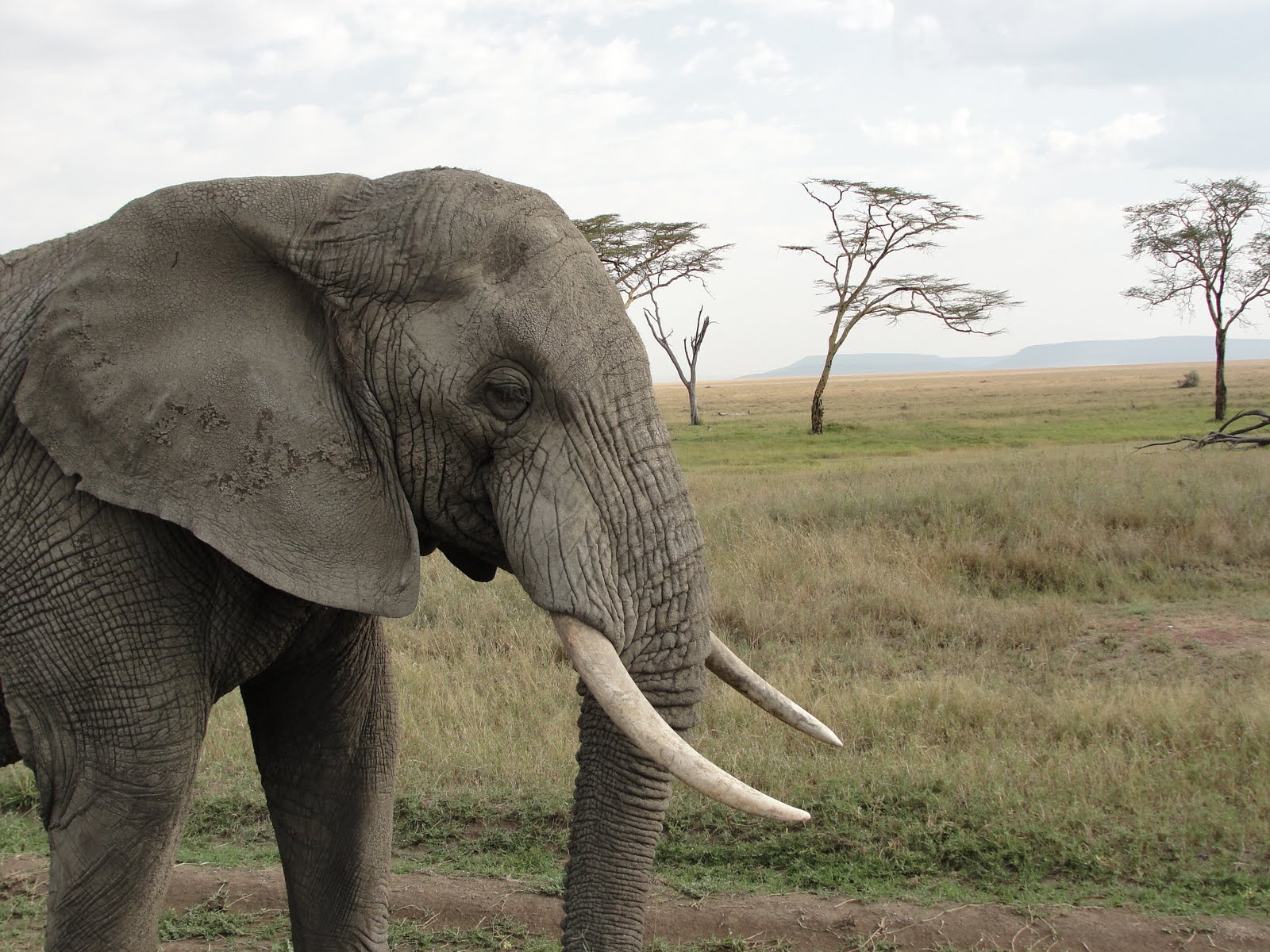


Chances are you will get to see an elephant in your lifetime even if you don't get to Tanzania, and that's a good thing because elephants are so damn lovable.

Giraffe


I still have yet to see a giraffe in any kind of hurry or distress. So it's like the Confucius or Buddha of the animal kingdom but it's too tall.

Gator


Crocodile or alligator?

Hippo


Seeing a hippo out of water is about as rare as seeing me without a shirt on.

Jackal and Hyena


Both low-tier carnivores that scavenge on the leftovers of lions.

Leopard
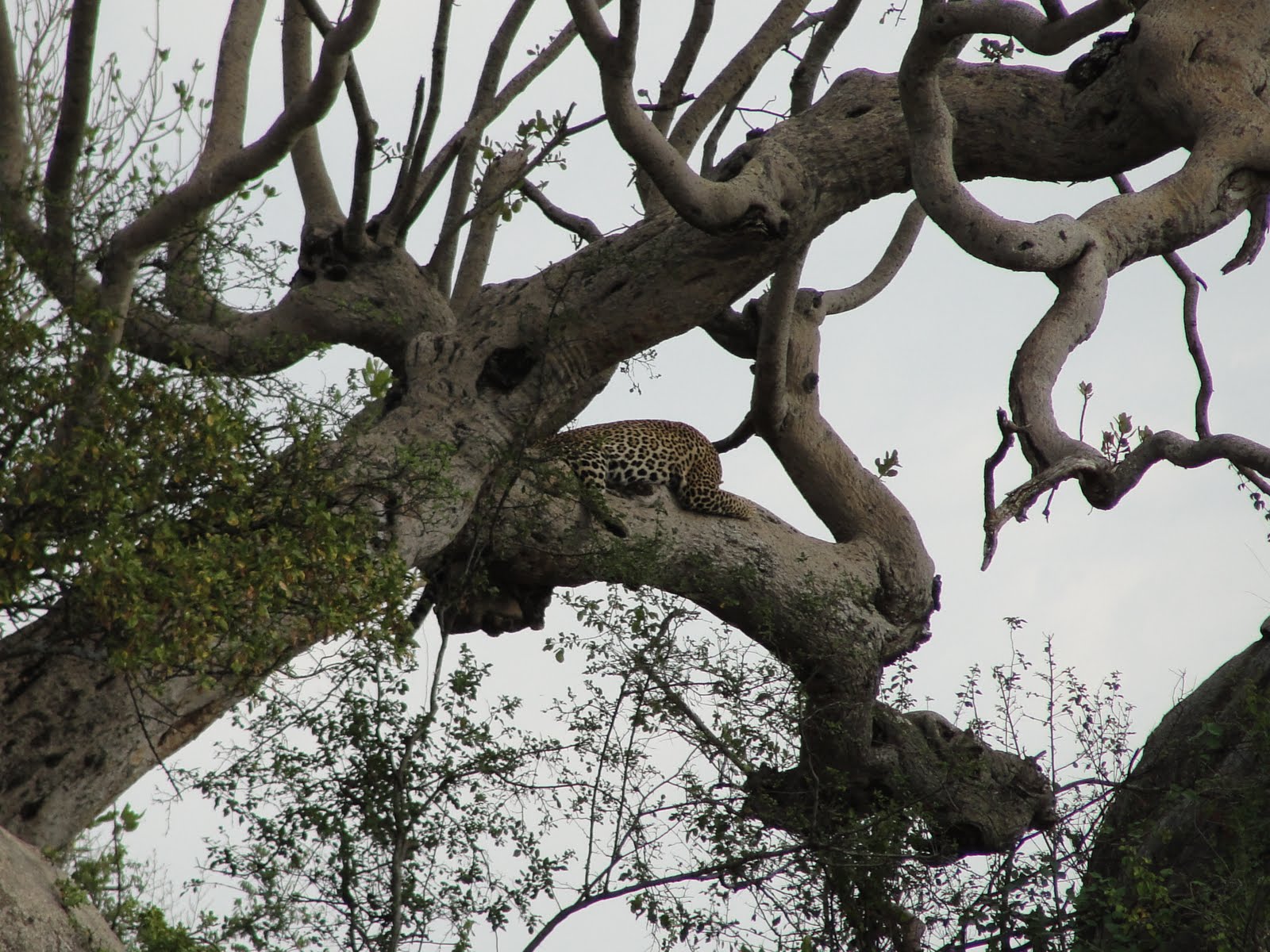


Spends most of the day sleeping on trees...

Lion


I'm a grown ass man at the age of 21, but I felt pretty awkward when this happened. I mean, does the male lion really expect the female to carry him on her back just because he is tired? Pitiful. But watching the lions do it, I have to say, was kind of reassuring because even the king and queen of the Serengeti kingdom are figuring love out. Even though the male's expression in the top picture screams triumph and conquest, I can tell you he lasted maybe 7 seconds in that lionny position. I can also tell you that in his frustration, he attempted to swallow the female's head whole and the female, equally frustrated with his timing and flaccid underachievement, dropped to the prairie grass and writhed in disappointment. Relationships ain't easy, mane.

Wednesday, August 17, 2011

We Pause for a Black Mamba Update

There was much ado about the resurgence of Asian stocks following the U.S. debt ceiling deal, but we, vigilant citizens of the basketball world, all sensed a second coming far more spectacular. Little did we know that the second coming would be deposited on the face of LeBron James. In case you missed the first remotely cool-looking dunk completed by someone of Asian descent:


Nearly simultaneous with the tumble of BronBron stock was a cool 43-point increase in BMI, which usually stands for Body Mass Index but here stands for Black Mamba Industries. Congratulations to James Harden and his orange shoes for being the last buyer of the championship-winning venom.

Friday, August 12, 2011

Tanzania Pt 2 - The Work Life


I am not sure how it exactly works, but humans somehow possess the ability to pick out a few tidbits of their existence that are worth their attention and consciously neglect others, often in a manner that suggests they are not sure what they really care about, or don't really care about what they claim to care about. It can be contagious and in worst case scenarios, festers into a myopia of an entire population such that they will ignore the pain of others' poverty, despite acknowledging the arbitrariness of their fortunes, or demonize those who hold views that differ from theirs, despite coming home to wives and husbands who disagree with them about whether it's appropriate to take their children out to Chipotle for dinner (it is) and whether foreplay should last longer than five minutes (I have no wisdom to offer in this department). I suspect it is this same capacity for selective processing and double-think that can explain how I drifted through much of this summer not doing a lot of critical self-reflection or meaningful engagement with pressing issues around the global community and still learned quite a bit in my area of interest. It's scary, really.

As an intern working for Neovita, a randomized controlled trial investigating whether Vitamin A supplementation for babies within their first two days of life improves their chances of survival at 6 months, I have had the incredible opportunity to watch a pretty important project unfold from backstage. Neovita is a massive effort orchestrated by the World Health Organization to obtain sufficient evidence to evaluate an intervention considered a cost-effective candidate for reduction of neonatal mortality. "Massive" and "sufficient" are really the key words here because the trial is simultaneously occurring at three sites chosen for their high infant mortality rates - Tanzania, India, and Ghana - each of which is slated to enroll a whopping 32,000 babies. 32,000! Just imagine the response you'd get from Vegeta.

The Tanzania project itself is grounded in sites at two major geographical areas: Dar es Salaam, the country's urban center with high population density, and Ifakara, the more rural neighbor to the north. I've spent all my time in the former, mostly working from a small office that serves as the home base for our trial management staff. The field operations are based in maternity wards at different hospitals around the city, where nurses consent delivering mothers for participation in the study and research assistants receive their daily assignments for follow-up visits. It is also at these hospitals that any data collected from women and babies are uploaded wirelessly from the field staff's handheld PCs to servers located at our office.

There was something that the professor who taught my health policy class last year emphasized over and over, and now I know it to be true: ideas and plans can sound great, but figuring out how to make them actually happen is often incredibly difficult. There is nothing mind-boggling about the design of our study - you recruit babies in the trial, you give some of them Vitamin A, and then you compare the health outcomes of the groups that got and didn't get Vitamin A. But to actually do it? Quite mind-boggling, it turns out.

I could dedicate an entire blog post just to problems encountered with Vilivs, which are the mobile devices nurses and research assistants use to fill forms when they interview mothers. A simple issue like reduced battery life or missing chargers, for instance, can actually cripple field operations. When research assistants set out to perform follow-up visits on the assigned households without adequately charged Vilivs, they may not be able to collect all required data from mothers in time. So they will either fill forms incompletely or use paper forms. In the latter case, someone has to go through the trouble of re-entering the data from paper to web. If the research assistants do it themselves, they lose time that could be spent on more follow-up visits. If the paper forms are given to data clerks and double entry is not used, data quality takes a hit. The Vilivs may also run out of battery while they are uploading entered data to the servers. The challenge is that the servers cannot tell you whether data are missing because data have not been transferred from paper to electronic form, the upload was unsuccessful, or research assistants actually failed to collect the data. So the data manager informs the RA supervisor about the missing data, the RA supervisor tries to ascertain the reason, and then the reason is communicated back to the management team so they can respond accordingly. At least that's what would happen in an ideal world, where servers are always functioning, electricity and gasoline in Tanzania are in good supply because government officials are feeling not corrupt, RAs are not fabricating data, and uh, RAs are not striking.

As for my niche in this complex ecosystem of humans, money, responsibilities, and feelings (is there anything else?) I have really just helped out in any way I can. For a while, that entailed organizing and storing all consent forms in numerical order and creating a database of IDs for which they are missing, in preparation for the WHO audit that happened just a week ago. All that means is if we held a contest to see who could more quickly pick out the bigger of two 6-digit numbers, I would beat you. Since then, my responsibilities have ranged from writing a Standard Operating Procedure about consent forms and doing site visits to make sure the field staff understand and follow it, to re-creating a staff contact list because the existing Excel spreadsheet has a virus. But mostly, I've learned a lot. And I've marveled at the many challenges and rewards that don't show up in the PubMed papers.

Some of these challenges and rewards, though, have been personal ones as well. My first official "global health" experience is one that had me feeling anything but global healthy, and it's not just because I was asked to perform tasks that feel small in the big scheme of things. It's the fact that when I am flipping through the consent forms and reading the names of mothers - or glancing at their thumbprints, in the case that they are illiterate - I know nothing about what it's like to be a mother in the district called Kimara, how many little kiddos already in broad daylight will be eating her ugali tonight, or what burgeoning hopes and brooding worries graced her mind as she walked back from the clinic. It's also the fact that global health, much less neonatal Vitamin A supplementation, does not come even close to getting at the heart of the matter, in Tanzania.

But disheartening moments like these seldom last long, thanks to my darker co-workers. Whether it's food, first dates, or Tanzania we prattle about in that stale, dingy 5th floor office, my data team bros are always reminding me, with their wit, compassion, and love, why I'm in this journey, exactly what and who is at stake here. And as for the daunting challenges beyond the realm of global health? We are taking a collective deep breath and tackling a small one together. Stay tuned, boys and girls.

Friday, August 5, 2011

Tanzania Part 1 - I May Never Get to Part 2


All things considered, it's probably safe to say this summer has seen more action than the rest of my post-puberty existence combined. And while females have featured not insignificantly in the experience because I am down with black girls of every single culture, my time in Tanzania has been different for the main reason that more of it has been spent living than reflecting. I've always thought that a truly meaningful inhabitance of Planet Earth - where human beings find it worth their while to search for truth, to be generous and selfless despite the blow to their survival fitness, and to attach some moral weight to cuddling after sex (which encompasses the first two items, by the way) - is a fine balance of the two. But the circumstances were a bit different this time around. I was halfway around the world from the place I call home, and the only way to do this incredible opportunity justice was to indulge in the sensory cosmogramma that may not come again. So now seems like the right time to retrieve some memories from the backburner and give them a nice, slow roast. Juices be dripping, brah.

Perhaps the most logical place to start is my home. Every morning, I awake from my mefloquine-immune REM slumber neatly tucked in a beautifully embroidered golden blanket like a kangaroo joey. The gold is a nice touch because the bed sheet is light salmon and the wooden headboard deep mahogany so if you throw in my temporarily burnished complexion, you probably have enough permutations on the painter's palette to finish at least one section of the Serengeti plains. The gold is also nice because it shimmers on the white marble tiles and then diffuses toward the ceiling, giving the appearance that the room is well lit even at dawn.

My room is one of four bedrooms that opens into a narrow corridor, interrupted for a brief stretch by a cavity holding the washing machine and drying board. The amount of light in the corridor is never the same at any given moment, depending on the amount of light received by the outside world and transmitted through each bedroom between the curtains, as well as its interplay with the blanket's gold. The bathroom is the only other repository on the second floor, and always full of surprises, since I have shared it with rotating rosters of two or three guests that have never included a male. So my Irish Spring soap and Head &Shoulders 2-in-1 Shampoo & Conditioner are mere pawns in an impressive procession of bath and hygiene products, and despite my pride in simplicity, I must confess that the names, packaging, and scents of this collection are damn creative, if not downright seductive. But what's more curious, perhaps, is that the site, after a female has showered, seems to retain some of her vital essence such that any combination of these artificial scents is always enveloped in a thin veneer of raw freshness reminiscent of a spring brook. Another discovery worth sharing is that the straightener and curler are in fact real devices.

Whether it's the frequency of use, the slowness of morning light to trickle through the windows in the first floor, or the difference between stone and marble, the white winding staircase down to the first floor does not have the same immaculate or bright character as the tiles in my bedroom. But this is usually the optimal site for sightings of small geckos that often match the white of walls and steps. As is customary of creatures in developing countries, these little buggers have remarkable footspeeds and athleticism and may or may not have secret parachutes hidden in their underbelly. A short left turn after the descent brings me to the mouth of the kitchen, which, I'm ashamed to say, really gets no love from me. The microwave has done a lot of heating take-away lunches on my behalf, and the refrigerator has been great about preserving my bananas but I leave the oven and cutting board to the residents with two X chromosomes. The living room, which leaks out to meet the hallway, is well-furnished with two comfortable opposing couches, a one-seater that directly faces a flat-screen Samsung TV, and a coffee table with a curious fiction collection headlined by Tom Wolfe and Jhumpa Lahiri, which, if you connect the obvious dots, says many Indian immigrants go on to study at prestigious schools and are now more sexually active.

Once I go out the main door, I waddle through a kind of stone garden until the security guard at the gate asks about my morning or sleep in Swahili. Sometimes he engages me in a longer conversation during which he will drop some not so subtle hints about the little salary he is getting and little food he's had in the last 24 hours. I have always considered stinginess one of my worst moral failures, and my conduct in Tanzania has done nothing to prove otherwise. After a few instances of coughing up some change and buying cheap bread for him from the supermarket, I started to ignore his requests. The truth is that despite where I stand and all that I have in my current position of life, and despite my full cognizance of the fact that others, through no fault of their own, are much worse off than I am, I still can't shake off memories of the daily sacrifices my parents made to get me here. Not yet.

The walk to my workplace is otherwise benign and even quite pleasant. The lushness that sets Tanzania apart from many of its African neighbors is apparent even in Dar es Salaam, the country's ultra-crowded urban center. Every morning I pass by probably a few dozen species of trees planted along sides of the road and outside houses, some of which are so random in character and distribution that I am convinced if there were ever a Noah called upon to preserve two of each flora and fauna, he must have been a Tanzanian. Coconut trees and other tropical vegetation with broad fronds fight for sunlight against flowering trees and thick-waisted behemoths with overhanging canopy, the latter of which is particularly useful for hiding litter (I have yet to see a public trash can in Tanzania) and underground sewage lines. My favorite tree, though, is this wooly spool of wrinkly leaves wrapped around a thin trunk - when it sways in the wind, it reminds me of those tree monsters from fantasy movies.

As you can probably infer from my earlier description of the guesthouse, the neighborhood where I reside is not like most in Tanzania, or even Dar es Salaam. High-rise apartments and lavish private homes are dwarfed by sprawling arrangements of run-down concrete block houses around the city, many that lack running water, electricity, and sanitary facilities. And though the guesthouse has been paid for and arranged by Harvard, it's an awkward position that I find myself, to count myself an advocate for social justice and human dignity while living the lifestyle of many who undermine them.

But for the hard-working Tanzanian folks who are building the to-be apartments and private homes in my neighborhood? A few poorly pronounced overtures in Swahili from my end have been enough for them to welcome me as a member of their community. Every morning when I approach the dozen or so workers eating breakfast in front of the skeleton of "Swiss Towers", I become nuthin but a G thang as I gratefully receive high-fives, handshakes, and fist bumps. I return their "Habari" with "Nzuri", "Mambo" with "Poa," and soon I will have already rounded the bend in the road, where James the security guard and Samuel the shoe polisher will get up from under their parasol to shake my hand and ask how I slept. The Swahili phrase that won them over, though? Weka mikono juu - Put your hands in the air.

Sunday, June 12, 2011

Nicaragua Trip Pt 2 - I Will Never Get to Talking About Tanzania


And I resume my Nicaragua recap... from Tanzania. I blame spotty Internet connection, untouched annals of Arrested Development, Flannery O'Connor, and mefloquine-induced laziness for this backlog. All picture credits go to Laura!


Solar Panel Project

One of the few tangibly useful things our group did for the communities we visited was purchase and bring down two dozen or so solar panels that were to each power a LED light in households without electricity. After a semester of reviewing indicators like mortality/morbidity, access to improved sanitation, and total fertility rate, I honestly wondered whether these were the most helpful or cost effective solutions we could contribute, but the community wanted them. And while I have reservations about making the goal of international development the fulfillment of needs and wants solely identified by the beneficiaries, I think it is safer, as a general rule of thumb, to heed the voices of the people you are serving rather than the voice of your Westerner's conscience. So solar panels it is.

Nearly half of the households in El Limon already have electricity, and the other half are hopefully getting theirs later this year (my family had no electricity but a LED light in the dining room) so it was decided that the solar panel project would be implemented in a nearby community called Agua Fria. By the time we arrived in Nicaragua, willing and able families had already paid a reduced fee to cover the cost of motorcycle batteries that hook up the lights. Eric, our trip leader and contact on the ground who had conceived the project with community leaders, had also trained himself and other local project leaders on the installation process. So when the panels came, it was time to execute, unlike the Miami Heat.

We split up into three teams, each headed by two engineers, and visited the designated households. At that point, I had already spent a couple days navigating dark rooms at my host family's - even during mornings and cloudy afternoons - and the unmet need of a well-lighted place was no less apparent in the houses of Agua Fria.

Luckily, all installations by the three teams during the two-day blitzkrieg were successful. Among those who will enjoy improved cis-trans retinal transformation hopefully for years to come are: a grateful mother who can now stare at her wall's disturbing mosaic of skin care ads from American magazines deeper into the night, a congenial elder who really needed some rotating colored lights to turn that empty barn into a salsa discoteca, and a congregation of Christians who may consider adding night service just to behold their church's very handsome wall paintings of Jesus under LED light.


INFLE

Instituto Nacional Francisco Luis Espinoza is a public high school in Esteli that our organization has worked with over the past couple years. It is again Eric who has orchestrated this partnership since its conception, getting to know the school director and teachers well during his multiple extended stays in El Limon, communicating with the teachers to identify ways in which Harvard students could facilitate their classroom experience, and even making personal donations to support a computer lab for students. This year, as with last, Eric had reached out to teachers interested in enlisting our help to prepare lesson plans in subjects ranging from biology and English to managing personal finances and recycling. But unlike previous years when we taught these lessons in front of the class while the teachers sat back with the students, we decided to try co-teaching the material with the teachers. After all, the objective of this exercise is to provide these local educators with the resources and skills to get better at what they do; its real value, at least in theory, lies in sustainability, not the one-time entertainment courtesy of foreigners.

As is typical of development projects, many things did not proceed as planned. Videos we thought were copied onto CDs were not really copied onto CDs. Teachers we thought were interested in co-teaching were not really interested in co-teaching. The English lesson plans that had been asked for were no longer asked for, and so on. But despite these frustrations, our week at INFLE did not end without some memorable highlights:

Genetics: A fearless gal by the name of Susan had prepared a comprehensive powerpoint presentation covering major topics in genetics and DNA, and for lack of a better movie critic's platitude, it was a smashing success. I would say only one of the two biology teachers fully tapped into the awesomeness of the presentation because the other had trouble holding the class's attention or reading the slides (which had already been translated into Spanish) but even that reduced effectiveness, the equivalent of using Water Gun on a robust Wartortle, meant something. Why? Because I sat in that classroom when Erica, the biology teacher whom students respected and understood, took that hard copy of the presentation slides in her hands and did work. She walked up and down the aisles, reading the bullet notes and supplementing them with her background knowledge, and when she neared an important vocabulary term, her voice trailed so the students could enunciate the word with her. As I had seen in other classrooms at INFLE, there were of course those students who secretly texted on their phones or waited for the slightest opening to yell something unnecessary. But there were also those students eager to turn the pages and to ask relevant questions, and those precious few warm bodies are the reason we bother with this whole teaching business, especially in settings where resources are low and motivation is low. We can't ever forget that.

The opportune meeting of great teacher, great students, and great lesson plan would have been sufficient to go down as a "What a Wonderful World" moment in my book, but then there was a video that Susan had brought with permission from its producer, Harvard professor Robert Lue. It's his spectacular 3D animation of the signaling activities implicated in white cell immune response, but in all honesty, it could just as well pass for a re-enactment of the virgin birth of baby Jesus or the keynote presentation for a conference convened to disprove global warming. In fact, I may have mistook one of the plump macrophages for an ovum, and in the heat of the video's relentless sensory assault, galvanized my desire to be a father one day. For the purposes of Susan's presentation, the important thing and the hope were that the video's sensational graphics and hypnotic music would get the students excited about learning biology. Seeing how students in every class asked for an encore viewing, I would say it accomplished that goal, although if I had it my way, the class would've received glowsticks for the second viewing.

Art: Serena, who had been told earlier in the week that the English lesson plan she had prepared would not be used, was then asked about her interest in teaching the first session of a nonexistent art class. Some of the biology students had noticed her sketchbook full of beautiful manga drawings and wanted to learn what it takes to draw pretty Asian faces. Given a sheet of large construction paper and some blackboard markers, Serena then improvised a lesson in front of a circle of intrigued faces, first sketching an apple before moving onto an organism of only slightly greater complexity in Min Lee. The students must have had a good time because when the bell rang to signal the end of the period, they patiently waited for the next gorgeous feature to appear on my face while their fellow classmates engaged in another lesson nearby headed for the exits. At least a few of the girls also stuck around after the drawing had been finished to show theirs to Serena and get her feedback. I suspect teachers need moments like these every once in a while to remember why they are teaching. Getting back to the portrait, I was actually quite flattered by Serena's rendition, especially the whimsical crystals in my pupils that are surely suggestive of a profound understanding of the human condition, and had her autograph it before I stowed it away. My fondness for the drawing was trumped, though, by that of a young well-dressed male student who kept standing up during class and approaching it with an erect penis. What a terrible way to end a post.

Tuesday, June 7, 2011

Nicaragua Trip Pt 1 - Meet the Family


I can't remember exactly what I was thinking and feeling while volunteering for three different organizations last fall, but I'm pretty sure I was at least unconsciously miserable for most of it. It wasn't that the organizations were incompetent, their missions misaligned with my values, or my contributions unfulfilling. In each of my roles as a volunteer providing legal information to clients, befriending callers on a suicide hotline, and working one-on-one with Cambridge residents to help them access services in employment, housing, and public benefits, I genuinely believed and still believe that my work had a significant positive impact on the lives of others. And because I happen to really care about that, I put in a lot of effort. Most weeks, I was working more hours than I had committed in order to do research or follow-up work for clients. But where most of that lot of effort went was interactions with each individual. I did all I could to be polite, understanding, and caring. I actively listened. I put on smiles and laughed. Eventually, though, I tired. I was physically, mentally, and emotionally exhausted. With little sleep and appetite, I mustered just enough to get through my classes and needed five weeks of doing nothing and Korean food to set me right again.

Did I have too much on my plate? If we are not talking about Korean food, then yes. But after these past two weeks of cross-cultural exchange and service in Nicaragua, I've stumbled upon the other reason for my Gasol-esque freefall. You know that feeling you get when you take a bite of Digiorno's after your cheap ass settled for that frozen shit from Ralph's instead of Pizza Hut? Well, that's kind of what happened. I tired because I didn't truly love the people I was serving. I tried to love, tried to convince myself that trying to love and loving are the same, and that, boys and girls, is the wrong place to use the equal sign. Moral and logical impetus to do good and to treat human beings with respect and dignity, while very powerful - and even preferable to love in some instances in my opinion - simply does not carry the raw, primordial energy of its counterpart. In this case, I was running on Digiorno's and crashed.

I think my inability to love at the time partly stemmed from personal root causes I don't quite understand, but it was also not helped by the design of service opportunities that I participated in. Developing profound emotional rapport with another requires knowing the other as well as you know yourself, and that is incredibly difficult to do in a sixty-minute client meeting, much less a ten-minute phone conversation. So this two-week trip to the rural community of El Limon, the fifth of its kind organized by Harvard College Project for Sustainable Development, was about engaging in a meaningful, sustainable human network that is so often neglected in the contextual framework of international development. Hidden in the child mortality numbers and skilled birth attendance coverage rates are uncounted years of surviving, growing, and feeling done by folks who, just like us, had no control over the conditions of life into which they were born. And we owe it to not only the success of poverty alleviation programs, but also ourselves to hear those stories and return them with our own. It is when we free ourselves from predispositions of understanding and interpreting accumulated through our lifetime, and see the world through others' that projects can be designed and implemented effectively. But genuine friendship and love, which make such a step possible, also transform the fundamental meaning and purpose of these projects. If you really love someone, why wouldn't you want to help?

Luckily for me, the host family who graciously welcomed me into their lives was easy to love. During the two weeks that we bonded over meals, games, and Nicaraguan penis jokes, they adopted this chino as one of their own hijos. Now it's time to meet the family:

Yami

My global health policy class taught me that maternal mortality is one of the most urgent and inequitable (99% of maternal deaths occur in developing countries) public health crises in the world, but then I met the mothers of El Limon and I understood. No statistic can capture what they mean to the community and the future of Nicaragua. Yami is a great example. Her stout body and slender legs would warrant a comparison to the mother hen if mother hens had her melodic voice or courage. Despite her claim to the fastest speaking member of the family, I enjoyed listening to her most because her voice always carried the crests and troughs of a songbird, the same way she acknowledged the joys and struggles of her life without deception. Her voice would dim and linger as she reminisced about her son who passed away, but regain its regular pace and brightness in time to greet one of her many tortilla customers. And the silky smoothness with which her tongue ran through the syllables of her daughter's abbreviated name would be sufficient to convince anyone of the love she had. Yami, though, always tells it like it is, and aside from making her a genuine person worth knowing, that is an invaluable asset in communities in the specter of chauvinism. She is the principal voice for women's rights in El Limon, and seeing how she showed no hesitation about choosing gender violence and machismo culture as the theme of our family "sociodrama" - a final skit that we prepared with our host families for the entire group - I think she doesn't mind reminding everyone once in a while. A very strong woman in all senses of the word, and a wonderful mother and cook who, after a day's work of being strong, mothering, and cooking, always looked you in the eye with caring vigilance when you talked. And I won't forget the quick flashes of silver from the filling in her front teeth when I smiled and she grinned back without speaking.

Ismael

El padre. It was more difficult to get to know him because he doesn't talk a whole lot and I don't talk a whole lot. I don't talk a whole lot in English so you can imagine how I am in Spanish. Based on my observations, I can tell you that he has no opinion whatsoever about the English words on the hats he insists on wearing, that he usually enjoys a second helping of arroz and also fried plantains if they are still on the table, and that he likes to walk around without a shirt when he's working. But he is also one of the most actively involved in politics in El Limon and is something akin to a community representative for his party, the Sandinistas. With a presidential election coming up, he was planning to relinquish some of his usual duties on the community planning committee to his wife to help with the campaign. Let's see, he is a skilled builder and wields a mean axe. A quiet pride flows in his face when he talks about constructing his family's house, and if the mood is light and he's feeling talkative, he will even throw in a deadpanned penis joke. What I'll remember about him is that sort of half-smile that creeps into your face when you are about to conjure an enjoyable or funny memory - he did that a lot with a friendly baring of the teeth. And a random ass question he asked me one day about whether I ever had a painful growth around my nipple during puberty.

Franklin

The 24-year old stud who emerged from the union of Yami and Ismael. Most girls on the trip were crushing on him to some degree, and I don't blame them. He has these big, earnest eyes I used to have before my Asian genes got transcribed, and the great thing is that they are hard to attract when you first meet him, but once he's done being shy with you, he'll gaze them straight and pure on his female prey and melt their hearts like rattlesnake venom. Can you tell I took a National Geographic Youtube break? It's clear the dude inherited his father's quiet swag but has given it his own spin, executing the redneck steez to perfection. His tall, well-built frame has found a home for vintage flannels, oversized belt insignias, and Wrangler jeans, and to top it off, he purchased a pair of black rainboots toward the end of our stay. Someone get this man a denim jacket. For all his flyness, though, he is gentle and humble, as well as a budding veterinarian. I've seen anger flash in those eyes from time to time but I'm sure Yami's raised him well. There's talks that he's getting ready to wed his girlfriend, and if so, other trip-goers and I are all excited to see him as a father on our return trip.

Alyeris (?)

There's a very good chance that her name is actually spelled Algeris because that's how her name is pronounced but with that exotic countenance of hers, I'll give her the benefit of the igriega. She is the 20-year old daughter of Yami and Ismael, and like Franklin, she was slow to break out of her shell. But she is much more openly affectionate and frivolous than her brother, and frequently surveys the room to see whether her gesticulations are being noted, at which point she will look down or away with a twist of her lips to feign embarrassment. I think the word used to characterize such behavior in certain circles of the female genus is cute. But the times she sits on her mother's lap or tries out new silly dance moves (which look good) when someone may or may not be watching are few and far between because she's always busy helping her mom around the house. She frequently cooks for the family, which on one occasion, included the task of digging through the body cavity of a freshly killed chicken, and still finds the time to attend school as she studies pharmacy. Alyeris definitely inherited the caring gene from her mother. She applies her steady gaze as soon as the slightest gravitas enters the room and will make you feel comfortable without doing anything. I think I got to know her the least well out of the family, though, and nowhere well enough to explore the dark corridors that are present in every woman. Case in point is her "accidental" peak-a-boo while I was taking a shower. Whatever she was thinking, she picked the right time to do it because my side view is the thing to order.

Wednesday, June 1, 2011

End of Sophomore Year


It really seems only yesterday that I took my first step into that sweltering vacuum of an empty freshman suite common room and beheld the sight of my roommate hilariously prostrate on his bed. With my brother, I inspected my tiny double with some consternation, debated whether I wanted the top or bottom bunk, and then began unpacking. Then I met my first acquaintance from Africa, who was not particularly burly or malnourished, and spoke better English than I did. Inside, I simply shrugged off these initial surprises with my characteristic accommodation of life's stochasticity. On that memorable day of freshman move-in, I had the temerity to assume that college life would unfold in an expectedly unexpected way. And this attitude, as it always has, would buffer the impact of any vicissitudes in either direction because a sense of resignation to what life has to offer begets a desensitization that sucks emotion out of experience and replaces it with pseudo-intellectualism. I felt at ease that night as my mind set to work extrapolating from the day's events to develop my immunity against Harvard.

Two years have flown by since, and my assessment of where I stand? In many ways, college has been who we thought they were. Busy and stressful, because of academics and extracurriculars. Interesting, because students come from all ethnic backgrounds and walks of life. Fantastic, when exams are done, Korean BBQ Tuesdays are in session, and weather is nice enough for girls to try on their new dope spring dresses, but gloomy when New England winter slush ravages the sidewalks and you've seen your third permutation of dry ass chicken for the week. Surprises that I encountered during my first year were, all things considered, minor, and I made the necessary adjustments quickly.

With the exception of one thing, which came out of nowhere and became more and more difficult to ignore. I became deeply invested in the well-being of others, close and distant, such that maybe for the first time, I cared enough about humanity to abandon a me-centric view of the world. The seed that was planted during my high school years as a moral obligation, a logical appreciation for the Confucian Golden Rule, grew an emotional root. And whether or not it deserves to be called love, the change is still a remarkably curious thing to me. Maybe simply being at college, especially in a setting like Boston, has made me more keenly aware of American identity, more fully immersed in the culture than ever before. And you can't be an American unless you have feelings. But I also know I've always had it in me. My mom used to say I have a lot of "jung," whose best English translation I can conceive is attachment to living things and acquaintances. Despite my shyness in large groups of people, I made friends with strangers fairly easily as a child and always took it hard when time came for goodbyes.

However it happened, resurgence of Hadouken of Love was here to stay. And when I reflect back on the spring semester of my sophomore year many years from now, that and the relationships it made possible, as well as the amazing joy and disappointments that accompanied them, will be remembered. It was the best and worst of times, and I felt very much alive through it all. Well played, life.

But aside from the above, this semester also brought a sundry of smaller surprises, ones that could escape my memory down the road unless I jot them down here. So now it's time to take a look back. Here's part 1 of the memories.

Spanish: Ever since forgoing AP Spanish in high school, I've been itching to re-enter el mundo maravilloso of upside-down question marks and genital-bearing nouns. Because my vision of double-majoring in neurobiology and Latin American Studies to understand the Latina mind is no longer tenable, I've settled for the option of reviving my Spanish from its deep siesta, and the first Spanish class of my post-secondary education certainly didn't disappoint. Highlights included energetic female professor with cute botas, friendly classmates, an oral presentation rhapsodizing Shakira's body (not me, I swear), screening of Motorcycle Diaries, and many speaking exercises featuring tense relationship scenarios. By the end of the semester, I had also identified Celion Dion as an inspirational figure in my life, confessed that Laker tickets would be the first thing to buy if I had a million dollars, and incorporated the phrase "ganar el amor de una chica" in every open-answer quiz. But perhaps my most shameful moment came during the final oral exam when I made the foolish mistake of mentioning Kafka's Metamorphosis in relation to another work we had read in class. With nowhere near the arsenal of vocabulary necessary to discuss the classic, I prevaricated en route to the claim that the main character manages to ganar el amor de una chica but she does not satisfy him in the way he hoped. Mr. Kafka, I deeply, deeply apologize.

Statistics: Weekly problem sets can be a bane and treat at the same time. On one hand, they necessitate consistent attendance at lectures, which is difficult when exams and papers in other classes roll around, and then stop you from taking a break to celebrate the end of those exams and papers. But on the other, they develop into a weekly tradition you bear out with your friends and a comforting signpost that fun, fun, fun, fun is not too far. For me, the statistics problem sets I completed with a friend were all of these things and so much more. The contents of our lives were poured from their respective containers to fill a single martini glass of pulsating cocktail with just the right amount of inflammatory aftertaste, and overdose was not an issue for either of us. I will miss those .csv data sets.

I also finished off the semester right by applying what I've learned to a deeply perplexing real-life problem that keeps all of us up at night - predicting the winners of NBA playoffs using regular season data. For the final statistics project, my group members and I analyzed regular season statistics from the past 31 years using logistic regression to identify any variables that were significant predictors of winners of Western Conference Finals, Eastern Conference Finals, and Championship series. The result? Having more 7 footers, playing at a faster pace (number of possessions per 48 minutes), allowing fewer points per 100 possessions, and employing an older roster seem to increase a team's likelihood of winning. But one should keep in mind that plenty of other factors not included in our study, such as abandoning the Triangle Offense, not feeding the ball into Andrew Bynum, and losing motivation, also matter. More on that sometime.

Global Health: So far, I have only talked about classes I've taken, and I think that means something. This spring marked maybe the first time in my academic career that I truly relished the process of learning and acquiring new knowledge. And much of it is due to the fact that I have finally discovered that passion to which I can devote the rest of my life - I want to help improve lives of people through international development. Achieving this goal entails becoming well-versed in a wide variety of disciplines including public health, policy, education, human rights, economics, and business. But just as important is cultivating character, moral integrity, and a certain psychological readiness for the task. And the two global health courses I took this semester did a bit of both. A key take-away for me has been that there is still much work to be done, but it is do-able. More do-able in places not named Afghanistan and Sierra Leone but do-able nonetheless. What excites me is that I genuinely believe our generation can develop the commitment and competence to put a significant dent on worldwide suffering and poverty. Only time will tell though.